
About Us

NAMI Multnomah’s mission is to improve the quality of life for people living with a mental health condition and their families through support, education, and advocacy.
We are the Multnomah County affiliate of the National Alliance on Mental Illness (NAMI), the nation’s largest grassroots mental health organization. NAMI Multnomah has remained independent to serve the local community, providing support, education, and advocacy under our own 501(c)3. Our programs support a wide range of people, including adults & children, family members & peers, Veterans, and civilians.
Our staff and volunteers facilitate a variety of peer-led educational events, support groups, and classes to help individuals and families better understand how to live with a mental health condition, begin the process of recovery, and sustain wellness. Many volunteers also share their stories and community resources at a variety of community presentations to change attitudes, assumptions, and ideas about people with mental health conditions.
A Year in Peer-Led Community Mental Health
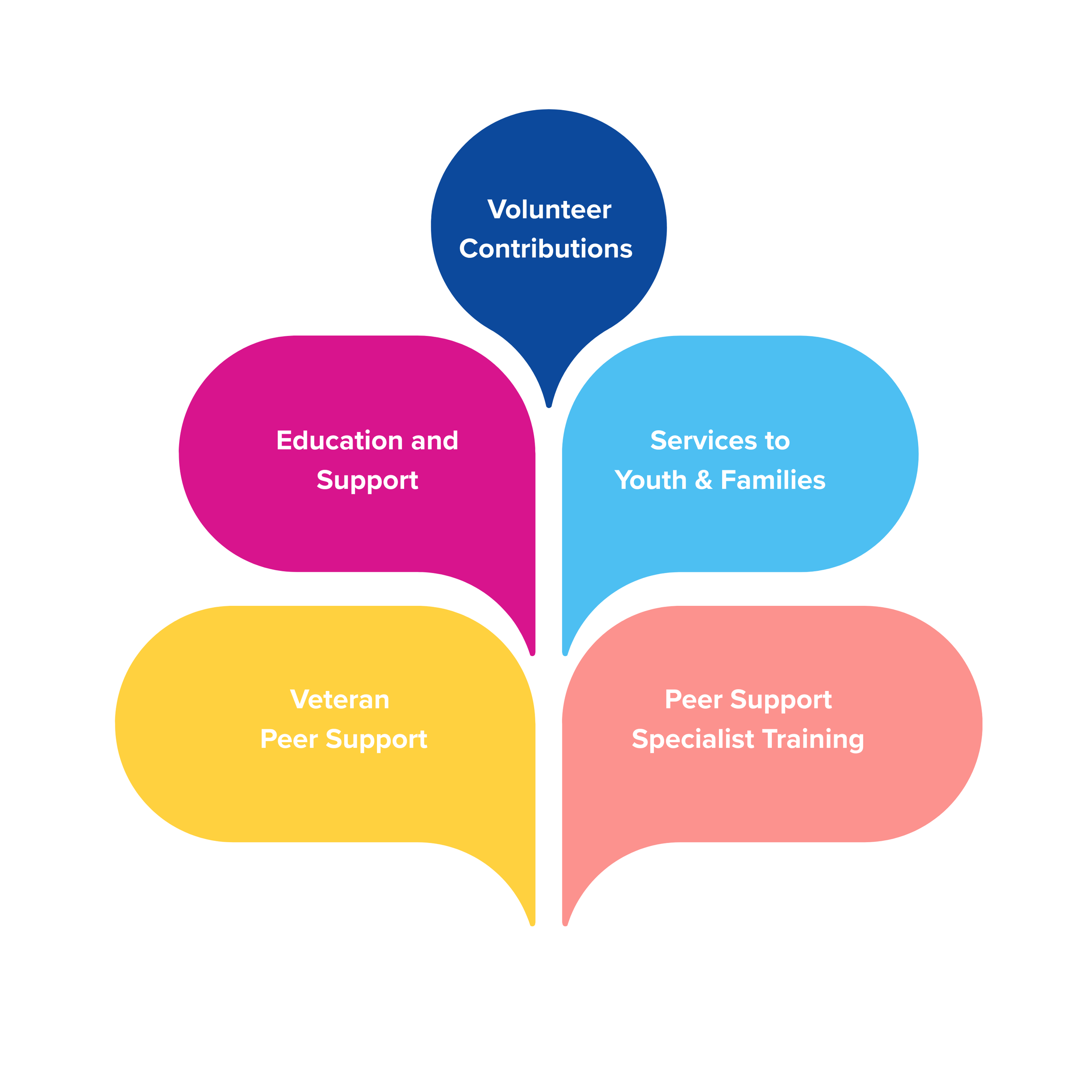
FY25-26 Annual Impact Report
This past year, NAMI Multnomah staff and volunteers provided peer-led community mental health supports through our peer-delivered services for families and Veterans, and our community programs for youth and adults living with mental health conditions and their family members or loved ones.
COMMUNITY PROGRAM HIGHLIGHTS
94 volunteers shared their lived experience in support of others through our support groups, mental health classes, and other community programs.
3,199 people received support and connection during one of almost 400 support group meetings.
334 students learned about mental health warning signs and how to help during the Ending the Silence presentation. 81% said they understood how to help after the presentation.
103 people graduated from our Peer Support Specialist Training.
PEER-DELIVERED SERVICE HIGHLIGHTS
Our Peer-Delivered Services team supported Veterans and families of youth with behavioral health challenges to:
Access life-saving medical care.
Feel hopeful about what's next when they were in the VA hospital.
Stay in the workforce.
Continue living at home with their families.